When it’s time to buy a new scrap logger/baler, throughput isn’t the only consideration.
Since scrap equipment is a major capital investment, it’s crucial to do your due diligence before you sign on the dotted line. The lifetime cost of ownership for your new equipment is a big aspect of whether it will maximize your profit. Cost of ownership, in turn, is influenced by a large number of factors.
Not all of these are obvious even to experienced scrapyard operators.
Every scrapyard is built around improving uptime and preventing downtime, but there’s more to any site’s financial success than hours worked. When you find yourself comparing scrap logger/baler models, you’re taking an opportunity to optimize your business for many years to come.
No matter where you go to source your next scrap logger/baler, the sales personnel you talk to should offer full and satisfying answers to your questions. Let’s look at a few of the most important questions you should always come prepared with, and how they affect your business long-term.
1. “How hard is it to find replacement parts?”
Regardless of make, model, or manufacturer, replacement parts are crucial to keeping any machine running. If a machine is new, replacement parts will be readily accessible for its full service life. But if it is twenty or even ten years old, odds are good that the parts it was built with have become obsolete or have substantial lead times.
Manufacturers do an excellent job keeping new components in stock, but availability drops off sharply with age. As older components become obsolete, inventory levels fall. It is not cost-effective for the manufacturer to keep obsolete hydraulic and electric components in stock, which can affect your machine’s repair costs and efficiency.
2. “How hard is it to operate and maintain the equipment?”
Many standard features and engineering principles recur in scrap logger/balers, but that doesn’t mean they are all the same. It’s good to keep an eye out for features that make it easier to operate your equipment. Not only does this protect the equipment, but also the people who have to use it every day.
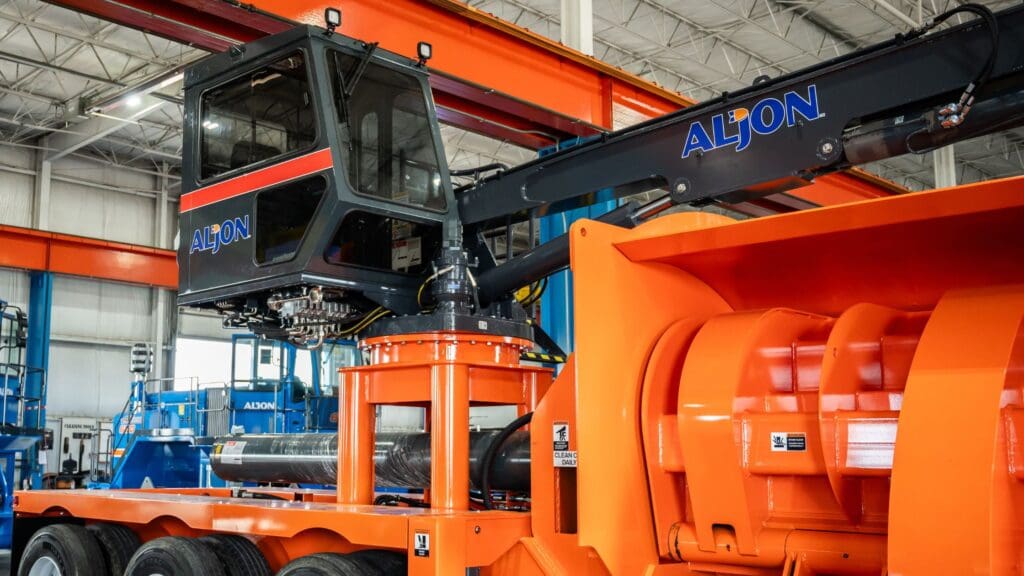
For example, watch for any features that can make scrap equipment maintenance easier. The Aljon 580CL car logger/baler bale chamber is specially designed to prioritize ease of access. Access to the bale at the center of the chamber instead of the side improves productivity and safety, contributing to a 90-second bale cycle.
In fact, all Aljon equipment has been carefully engineered with easy-to-access maintenance points. Regular maintenance is one of the biggest contributors to a long and low-cost service life for your machine; making maintenance easier helps your technicians stay on top of issues, limiting equipment downtime.
3. “What is the expected life-cycle of the machine?”
How can you estimate the ROI of your new scrap logger/baler? Come prepared with an estimate of expected tonnage intake at your scrapyard, then compare it to the throughput and expected lifetime of your machine. This way, you can quickly compare multiple options in terms of their real bottom-line impact.
Remember: in general, you can expect a scrap logger/baler to perform for about 10,000 operational hours before repairs become more frequent. That doesn’t mean failure is imminent when you reach that mark – several Aljon customers have reported their equipment lasting 20,000 hours with consistent maintenance.
Still, 10,000 hours is the benchmark to be aware of. That’s when you should begin planning for replacement.
4. “How is the manufacturer support for this model?”
Manufacturer support for scrap equipment varies tremendously. Some companies will give you priority support and a variety of perks throughout the machine’s lifetime. Others, well … you’re on your own. Most fall between these two extremes, with a few specialized perks that they’ve developed over the years.
Here’s the thing: post-sale support isn’t just “nice to have”; it’s a must-have. Investing in a sophisticated piece of industrial equipment shouldn’t be like buying a used car. The last thing you want is to purchase a machine, then discover you don’t have anyone you trust to help you maximize its output throughout the life cycle.
How Experienced Scrapyard Operators Navigate These Questions
Every buying cycle, a scrapyard operator needs to be prepared to talk to vendors and get clear answers. Luckily, there are some best practices that can see you through making the right selection for your business, even if you are relatively new to the industry. Here’s what an experienced operator looks for:
1. Parts Availability
An experienced operator lowers business risk by purchasing from a vendor that has a proven, multi-decade track record of keeping common replacement parts in stock. Vendors should be able to discuss their policies, responsiveness, and shipping turnaround time as these relate to your business.
2. Operation and Maintenance
Of all the factors that influence operation and maintenance, experienced operators tend to prioritize machines that offer easy loading and unloading of the baling chamber. Efficiency in this area is directly tied to production numbers. Plus, the easier it is to do maintenance, the more likely equipment will be maintained properly.
3. Machine Life-Cycle
Experienced operators don’t hesitate to do the math before they decide on a scrap logger/baler. The machine life-cycle is a key factor in figuring out your ROI, and ROI should always be one of the top buying considerations.
4. Manufacturer Support
It’s easy to underestimate the importance of after-sale support. In many cases, though, it is actually the most important issue. At Aljon, we like to say, “The best ability is availability,” and we stand by that for our customers.
Aljon Makes It Easy to Get Great ROI from Your New Equipment
With some vendors, it might feel like the pre-sales conversation is just you trying to figure out what they’re not telling you. Aljon takes the guesswork out. With more than 60 years of experience, our legacy of quality means we are always upfront about our engineering, maintenance, operations, and after-sales support.
Whether you are new to the scrapyard industry or an old hand, you don’t have to worry about predicting the future: we’ve worked with hundreds of businesses like yours and we can help you anticipate your needs. That remains true before the sale, at delivery, through onboarding, and for the full life-cycle of your purchase.
Whenever you need help maintaining your scrap logger/baler or improving its performance, you’ll always have the option of calling Aljon and speaking directly with our engineering experts. Our U.S.-based manufacturing is the biggest reason we can offer reliable stock and fast turnaround of the components you need.
Need on-site assistance with your equipment? You have access to our network of Approved Service Providers. No matter the situation, standing by our customers and helping them to do their best work is the Aljon way.
Your scrapyard equipment purchase will influence your business for the next five, ten, or even twenty years. That’s why it’s important to the Aljon team that even if you don’t choose us, you never decide “in the dark.” Contact us today to learn more or get started.