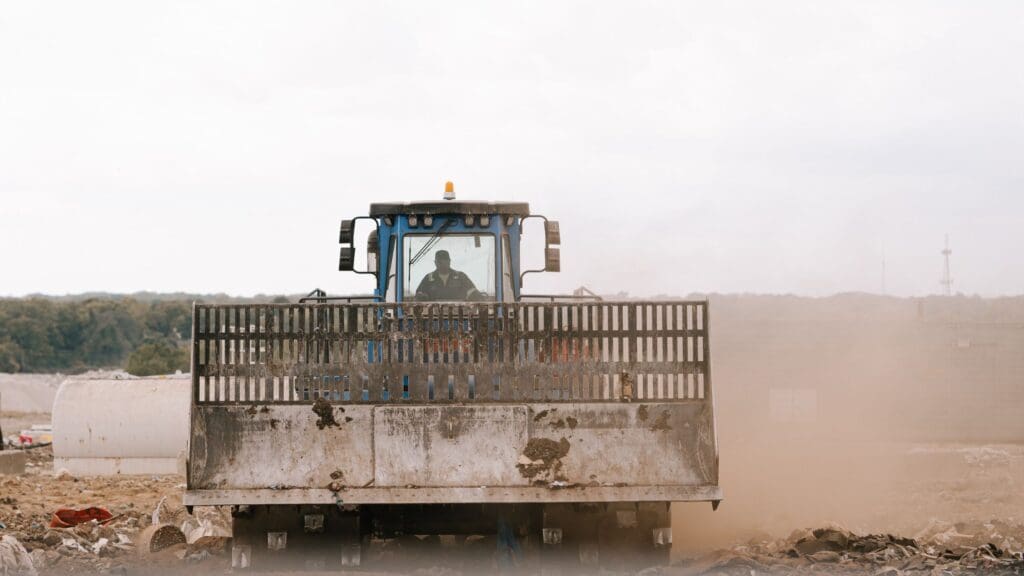
When it comes to landfill compactors, bigger isn’t always better. The optimal size for a compactor depends on a number of factors. When equipment is too large or too small, performance and efficiency suffer.
Luckily, landfill operators can make an informed choice by taking a few key performance metrics into account. Regardless of which manufacturer you choose, landfill compactors can all be evaluated by common factors.
Those key performance metrics include:
1. Operating Weight
The operating weight of the landfill compactor is one of the most important factors to consider.
Typically, the required compactor weight correlates directly with the average daily tonnage of waste entering the landfill.
Optimal operating weight is often estimated with the following formula:
Average Daily Waste (tons) × 100 = Minimum Compactor Weight (lbs)
For example:
- 800 tons of daily waste
- 800 × 100 = 80,000 lbs minimum compactor weight
Of course, no industrial process reliably operates according to its average all day, every day. For that reason, operators should take peak hours during the day into consideration. It’s wise to evaluate whether your waste arrives evenly throughout the day or if a short time window accounts for most of it.
A larger machine can be appropriate when most waste arrives within a short time window each day. A larger landfill compactor will be helpful in managing increased compaction demands during the busiest periods.
2. Pounds Per Linear Inch (PLI)
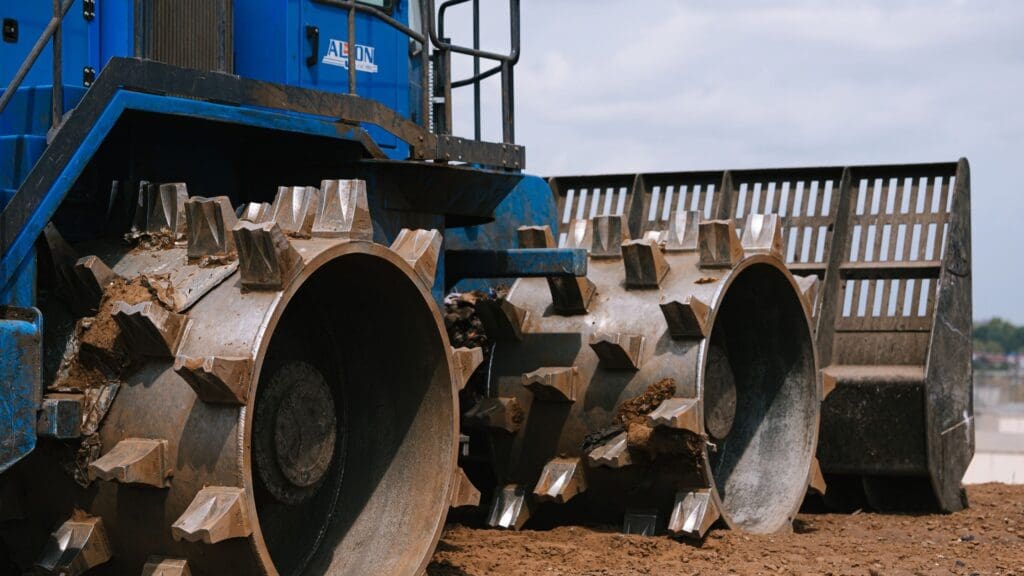
Pounds per Linear Inch is a measurement of how the weight of the compactor is applied to the waste.
It is calculated by dividing the width of all wheels, also called its footprint.
For example:
- An Aljon ADV 525 Landfill Compactor has four wheels, each one 48 inches wide
- 48 X 4 = 192
- The weight of the Aljon ADV525 Landfill Compactor is 115,000 lbs
Dividing 115,000 by 192 leaves us with the answer: 598.96 Pounds per Linear Inch
In general, a higher PLI results in better waste compaction performance.
You’re probably already familiar with Pounds Per Square Inch (PSI). What’s the difference between Pounds Per Square Inch and Pounds Per Linear Inch? PSI is the more common measurement because it’s used to measure static weight. Landfill compactors, however, compact waste while in motion (dynamic weight).
The dynamic force generated in the landfill compaction process is more accurately measured using PLI.
3. Gradeability
Do you typically compact waste on slopes in your landfill? Some landfill operators find that slopes may be necessary to optimize their use of space. However, if a landfill compactor is not designed to handle grades effectively, its operating efficiency could be diminished.
For landfills that regularly compact waste on slopes, hydrostatic powertrains provide operators with superior grade performance. All landfill compactors manufactured by Aljon feature hydrostatic drive systems. These systems are capable of 100% gradeability, ensuring strong compaction performance even on slopes.
The Right Landfill Compactor for Your Needs Is Waiting for You at Aljon
Your choice of landfill compactor is essential to your operation’s throughput, safety, and – ultimately – its profitability. With more than 60 years of experience as the #1 choice for landfill compactors, automotive scrapyard equipment, and more, Aljon understands the importance of efficient, quality landfill machinery.
No matter the size or history of your landfill operation, our team will be glad to help you select equipment that helps you reach your goals. After you buy, you’ll always have direct access to call the experts who work at our manufacturing facility. We’re with you for the life of your equipment and the future of your business.
Contact us to find out more or get started with industry-leading landfill compactors.